


Florence Pugh is easily considered one of the most captivating performers in the MCU. Her journey from acclaimed ‘indie darling’ to the heart of Marvel’s future demonstrates how the right actor can transform a supporting character into a franchise cornerstone.
This is the story of how Florence Pugh’s pre-MCU success positioned her perfectly to play Yelena, and why her performance has made her indispensable to Phase 5 and Phase 6.
The Pre-Marvel Foundation: Building Credibility Across Genres
Before Florence Pugh ever set foot in the Red Room, she had already proven her versatility. Her breakout performance in Lady Macbeth (2016) showcased an intensity and fearlessness that would later serve her perfectly in action sequences.
But it was 2019 that truly established Pugh as a force to be reckoned with. Fighting with My Family saw her starring opposite Dwayne Johnson in a wrestling dramedy, demonstrating her natural comedic timing and ability to hold her own alongside major action stars.
Then came the one-two punch that changed everything: Ari Aster’s Midsommar (2019) and Greta Gerwig’s Little Women. In Midsommar, Pugh delivered one of the most psychologically demanding performances in recent horror cinema, showing she could anchor a film through extreme emotional territory. Little Women proved she could bring depth and spirit to beloved literary characters, earning her an Academy Award nomination for Best Supporting Actress.
This was the perfect training for the MCU. Pugh had proven she could handle action (Fighting with My Family), psychological intensity (Midsommar), period work (Lady Macbeth, Little Women), and ensemble dynamics.
When Marvel was considering actresses to play the Black Widow’s sister, Florence Pugh had already mastered every skill that the role would require.
Enter the MCU: The Yelena Belova Introduction
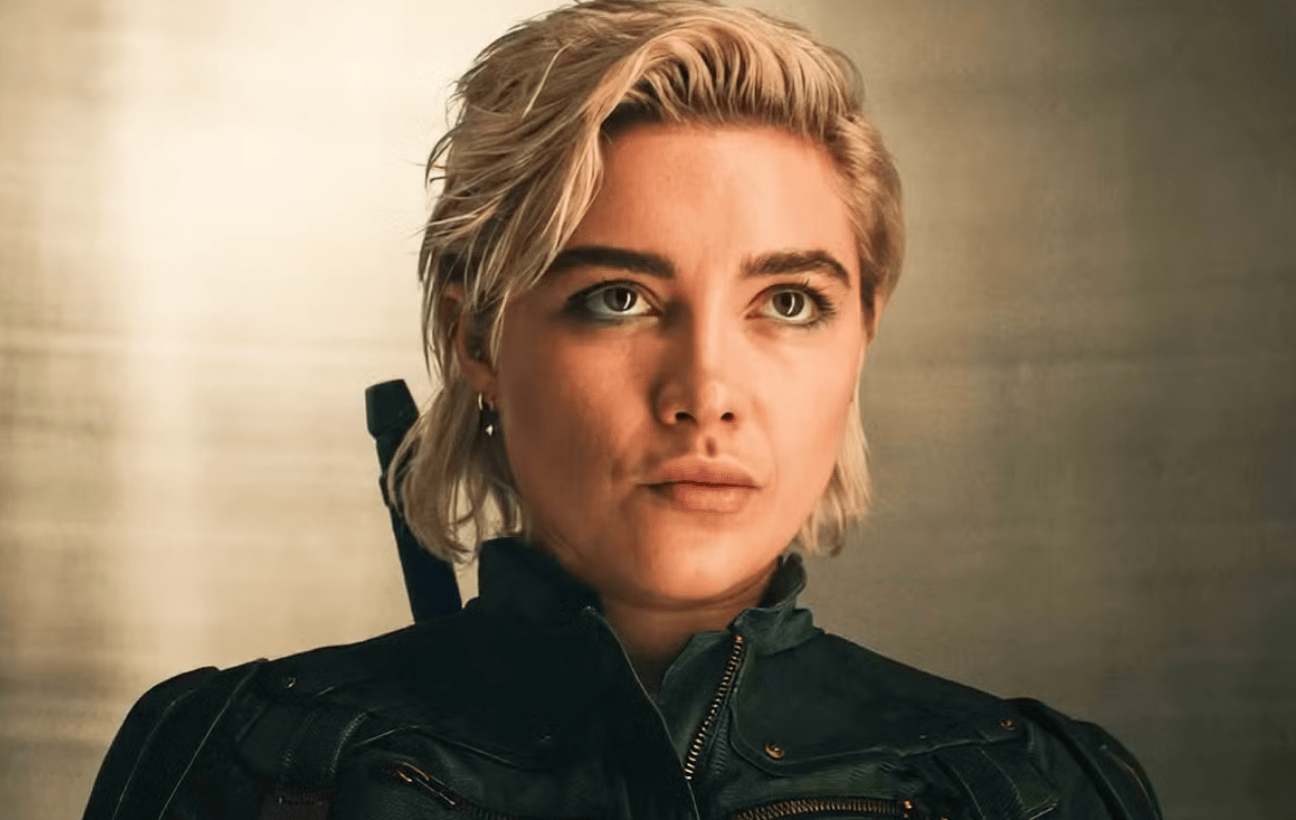
She made her MCU debut as Yelena Belova in 2021’s Black Widow 2021, and it was immediately clear that Marvel had found something special. Director Cate Shortland said that Natasha Romanoff would be “handing Belova the baton,” speaking to Marvel’s long-term vision for the character. But what made Pugh’s performance so compelling was how she brought the emotional honesty from her indie work to a big-budget superhero film.
As Natasha’s adopted younger sister, Yelena could have easily been a simple copy of Scarlett Johansson’s iconic character. Instead, Pugh created someone distinct: where Natasha was controlled and mysterious, Yelena was curious and direct. Where Natasha carried her trauma internally, Yelena wore her emotions on her sleeve. Pugh balanced the character’s deadly training with a childlike wonder about the world she’d been denied, creating someone who felt both formidable and endearingly human.
Expanding the Legacy: From ‘Hawkeye’ to Fan Favorite Status
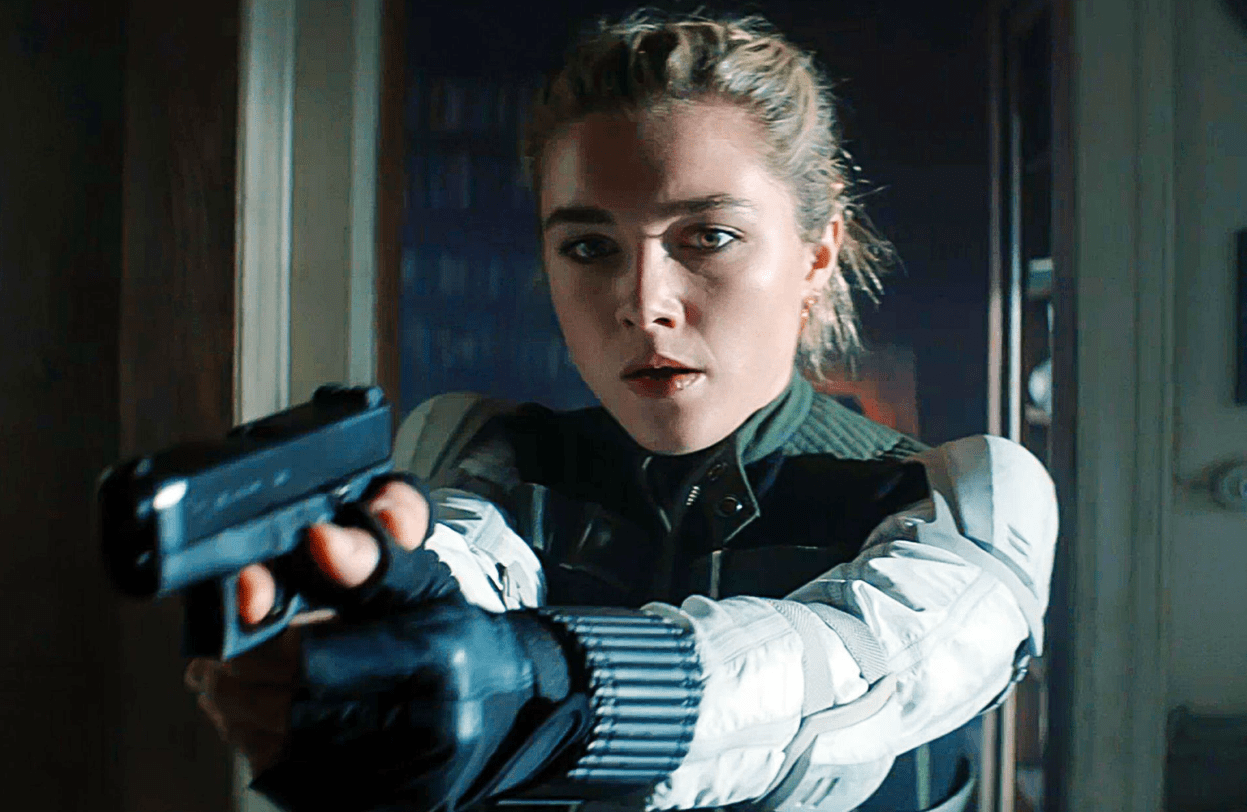
Yelena’s return in the Disney+ series Hawkeye was where Pugh truly proved her worth in the MCU. The three-episode arc showcased her ability to bring depth to what could have been a straightforward revenge story.
What made these Hawkeye appearances so successful was how Pugh never lost sight of Yelena’s emotional core. Her grief over Natasha’s death felt real and personal, not just a plot device. She made Yelena’s journey about finding her own identity outside of the Red Room’s conditioning, while still delivering the action sequences and witty dialogue that Marvel fans had come to expect. Critics immediately recognized that Pugh had officially established herself as a fan-favorite among Phase 4’s new characters.
The Thunderbolts Era: Leading Marvel’s Anti-Hero Revolution*
In 2025’s Thunderbolts* (2025), dubbed Thunderbolts* with an asterisk—Pugh takes center stage as the leader of Marvel’s most dysfunctional team. Leading a ragtag ensemble including Bucky Barnes, U.S. Agent, Red Guardian, Taskmaster, Ghost, and recruit Bob, she transforms from supporting player to franchise cornerstone.
The film leans less on spectacle and more on emotional stakes and trauma, with critics praising it as “one of the best” recent MCU entries, citing Yelena as a compelling, grounded force of leadership and vulnerability.
But Thunderbolts* represents Pugh’s complete evolution into MCU royalty. According to Pugh herself, this is a completely evolved version of the character we’ve seen before, someone who has grown from Natasha’s little sister into her own kind of hero.
In the climax, instead of relying solely on force, Yelena appeals to emotion, risking everything as she steps into the darkness to talk to the Sentry (The Void) and save countless lives. The moment echoes one of the MCU’s most defining sacrifices — when Iron Man carried the nuclear missile through the portal in The Avengers (2012).
The Physical and Emotional Commitment: What Sets Pugh Apart
What makes Florence Pugh’s integration into the MCU so remarkable is her unprecedented commitment to both the physical and emotional aspects of the role. Pugh performed her own stunt, jumping off Merdeka 118 (the second-tallest building in the world), reflecting her commitment to the character’s authenticity and grit.
In a team of antiheroes, she becomes the emotional compass, with her compassion often uniting the others both emotionally and tactically. The Guardian suggests that Thunderbolts* and Yelena’s presence are part of Marvel’s experiment to reset tone and direction away from overblown bombast toward human complexity. In an era when the MCU desperately needs new storytelling approaches, Pugh represents the perfect bridge between the grounded emotion that made the early films special and the cosmic scope of what’s coming in future phases.
What’s Next: The Future of Marvel’s New Leading Lady
Rumors place Pugh back in the MCU in Spider-Man: Brand New Day (due July 31, 2026), potentially as a key collaborator with Tom Holland’s Spider-Man, signaling deepening ties to the next Avengers arc. More significantly, she will take center stage in Avengers: Doomsday (2026) and Avengers: Secret Wars, part of Phase Six’s multiverse-spanning storytelling. The fact that she’s confirmed for both upcoming Avengers films indicates that Marvel sees Yelena Belova as essential to their biggest storylines moving forward.
The Yelena Belova Effect: Redefining MCU Stardom
As the Multiverse Saga expands, Marvel is clearly positioning Pugh as a centerpiece, someone whose presence can bridge ensemble chaos with grounded emotion. That’s the real Yelena Belova Effect: proof that in a cinematic universe built on powers, spectacle, and endless continuity, it’s still the right actor in the right role that makes the difference.


